Showing posts with label varietals. Show all posts

Sunday, January 31, 2010

Petite Sirah: Petite or not?


A recent conversation and tasting with Girard winemaker, Zach Long, brought to my attention that a long held belief that Petite Sirah is so named for its small berry size may be a myth. As we tasted Girard’s 2007 Petite Sirah, a deliciously big, fruity, inky, juicy wine from Napa, I was quite surprised to hear Zach say that in fact Petite Sirah berries are not wee things compared to, say, Syrah, or other popular red grapes. I quickly checked my own book (beware: shameless plug ahead), Wine At Your Fingertips, to make sure that I had not been lying to my tens of readers all this time. Phew, I left out discussion of Petite Sirah berry size altogether!

That didn’t mean, however, that I had not read in more than one place that “Its smaller berries with higher skin to pulp ratio leads to more intense flavors” in reference to Petite Sirah. I thought this was kind of the gist of it and, well, it does make sense. Petite Sirah is intensely flavored and has formidable tannin structure, which in part comes from the skins of the grapes. When I Googled “Petite Sirah berry size” the majority of results made reference to the small sized berries. However, when I Googled actual images of the grapes on the vine (see picture) the berries did not appear to be that small after all. The clusters are snug but that is all that I could decipher from the pictures. Ambling down this road has only succeeded in confusing me (and now you!) so let’s just get down to what we know…or what we think we know…

Petite Sirah was cultivated in the 1870s in the Rhone region of France where it is known as ‘Durif’ or ‘Petite Syrah’. The grape is the result of a cross between Syrah and a relatively minor Rhone variety, Peloursin. It is more successful in California than it ever was in France and is most commonly spelled ‘Petite Sirah’ there, an anglicized spelling of the original name. The grape generally produces bold, deeply colored wines with big, dark, inky fruit and plenty of tannin structure. It is often used as a blending grape most notably to add color. Wineries in the U.S. can now use either Petite Sirah or Durif on wine labels. I love Petite Sirah in the winter because it is warming, soul-satisfying, and unique. We have some great examples in the store at various prices including Vinum Cellars PETS ($15.99), The Terraces ($33.99), and Outpost The Other (54.99). You should give it a try no matter the berry size!

Wednesday, July 18, 2007

2005 Les Jamelles Chardonnay

Yet another value find from the Vins de Pays d'Oc wine tasting on June 13th in NYC, this one a 100% Chardonnay.

The 2005 Les Jamelles Chardonnay hails
from different growing areas at various altitudes throughout the Languedoc. It has a nice weight to it with good acid and ripe fruit to balance out the nuttiness. It is a refreshing Chardonnay — not heavy — and would pair nicely with summer fish dishes, particularly scallops.

The wine is made by two winemakers, Catherine and Laurent Delauney, from Burgundy. They both spent time making wine in Burgundy and California before settling in the Languedoc area.


Intensity: B

Complexity: B

Balance & Structure: B+

Current Grade: B+

Peak Grade: B+


You can find the wine for between $8 and $10 at places like Pops Wine & Spirits and Premier Cru Wine Merchants.

A votre sante!

Saturday, July 07, 2007

Now that's good stuff: Kosta Browne

This past May, Winemonkey and I were lucky enough to receive an allocation from Kosta Browne Winery after doing our time on the mailing list. Although we have yet to sample any of the single vineyard wines from Kosta Browne, we did score some 2005 Russian River Valley Pinot Noir (they produce two appellation wines -- Russian River and Sonoma Coast) and boy is it damn good.

The winery is a venture between Dan Kosta and Michael Brown -- thus the name -- and they specialize in producing high end Pinot Noir along with a little Syrah for good measure. The 2005 Russian River Valley Pinot is a blend of five vineyards and production is small, if not paltry, at 1,800 cases.


Although I was tempted to hold on to the bottles and give them some time in the old Eurocave, Vino Girl had some friends over for dinner and the kind that fully appreciate good wine. The website recommends drinking the wine "between 2008 and 2013" which gave me pause but then I decided to go for it.


The wine is "delish!" as my sister-in-law would say, as well as rich and intense with ripe red fruit and great acidity. You won't get the earthiness you experience in good Red Burgundy but, hey, this is not Red Burgundy this is California Pinot at its best. Vino Girl is not a fan of the "candied cherry" Pinots put out by some California producers but this is far from it -- lots of flavor, good depth and silky texture complete the package.


If you have some of this stuff (it looks like you can find some online for $75 - $100) and you want to wait a few years to drink it, by all means, but it’s drinking really well right now and I am not sure what age will really add to the experience.


Allocations for the 2005 Single Vineyard wines are due out in August and I am crossing my fingers. I am now officially out of my stash – damn epicurean friends! ;) Maybe Winemonkey will share??

Thursday, July 05, 2007

Vins de Pays d'Oc: 2005 Domaine Miquel Viognier

Another value find from the Vins de Pays d'Oc wine tasting on June 13th in NYC, this one a Viognier from St. Chinian in the Languedoc-Roussillon.

The 2005 Domaine Miquel Viognier has all the classic characteristics of the grape including a pretty, flowery fragrance and tropical fruit flavors with a touch of peach and honey on the palate. The wine is not at all sweet and is even more refreshing than some Viogniers which can be notably low in acidity. I could not help but notice that this was a big hit with everyone at the event and most tasters spent an inordinate amount of time tasting and retasting this elegant and cheerful white.


Domaine Miquel as been in the Miquel family since 1790 (talk about tradition!) and grapes were grown on the site since Roman times. Drink in the history for only $16 a bottle.


Intensity: B+

Complexity: B+

Balance & Structure: B+

Current Grade: B+

Peak Grade: B+


You can find the wine at Smith and Vine online, or in Brooklyn, NY.

Tuesday, July 03, 2007

Oink! if you like Syrah: 2003 Wild Pig

Vino Girl attended a tasting of Vins de Pays d'Oc wines on June 13th in NYC. Pays d'Oc wines are all made along the Mediterranean in the South of France, more specifically in the Languedoc Roussillon. Their origins are four districts within the Languedoc including Pyrenees Oreintales, Aude, Herault and Gard. They are not wines to be taken too seriously but can afford you a satisfying wine drinking experience at a very reasonable expense -- we're talking $8 - $15 bucks here!

One of the wines that stood out for me at the tasting was the
2003 Wild Pig Syrah, a 100% Syrah with the unfortunate tag line, "take a wine on the wild side". It comes to mind today as Vino Girl ponders the July 4th holiday ahead and the BBQ'd food that comes with it -- food that will easily be tamed by and harmonize with the Wild Pig. The wine is not some overblown Syrah but has a liberal dose of red berry fruit, nice spice, impressive balance and good acidity. For $8.99 all this should make you happier than a pig in, well, you know!

Intensity: B+

Complexity: B

Balance & Structure: B+

Current Grade: B+

Peak Grade: B+


Where can you find a Wild Pig in these parts? Try
Wine Legacy in in Plainview, NY.

Sunday, July 01, 2007

2006 L'estandon Cotes de Provence Rose

It's that time of year again - sunshine, beach blankets, barbecues, rolling blackouts (oh, stop!) and ... rose. We'll be tasting a series of rose wines at Drink The Good Stuff over the summer months and we pledge to report back to you with the delicious, the dreadful and everything in between.

Our first in the series, the 2006 L'estandon Cotes de Provence Rose falls securely in the "in between" category. We found it very rustic but with some nice body for a rose. The fruit was a bit candied, with some overt sweetness that might appeal to certain poolside imbibers. The final note was tart with citrus flavors and a lingering acidity. Overall, this is a passable rose but one we would not seek out again.


Intensity: B
Complexity: B
Balance & Structure: B+

Current Grade: B
Peak Grade: B

Taste for yourself -- $9.99 at Beacon Wine & Spirits!

Saturday, March 17, 2007

2004 Spring Mountain Vineyard Syrah

Wine Monkey and I recently opened a bottle of this 100% Syrah from the Spring Mountain District in Napa and - wow - what a nice surprise. I say surprise because I tend to think of California Syrah as overwhelming to the palate - too spicy, overly smokey, or simply over-concentrated and overpowering. The 2004 Spring Mountain Vineyard is textbook Syrah but in just the right proportions. It has nice smoke, jammy fruit, appealing spice, good texture and weight and is well balanced. If your palate is tired of tongue-staining, overblown Syrah and you like a refreshing dose of acidity in your wine, give this a try for sure.

All the fruit is from the Miravalle vineyard, one of Spring Mountain Vineyards four properties, and there are only 495 cases of the 2004 vintage. The first vintage was 1997 and the wine costs $50 from the winery. Spring Mountain Vineyard's primary wine is a red Bordeaux blend but they also produce wine from the traditional white Bordeaux varietals - Sauvignon Blanc, Semillion and Muscadelle. Syrah and Viogner are more recent plantings.


Save your smile, cheers!

Thursday, February 22, 2007

Chardonnay or Pouilly Fuisse?

[From The Ladies Who Launch Weekly Wine Tip]

Wine can be a mystifying subject and it doesn’t help that each country has its own protocol for wine names and labels. U.S. wine labels are relatively easy to decipher because most tell us the grape, the place it was produced, the year it was produced and even the percentage of alcohol. Although that certainly does not tell the whole story about what is inside the bottle, at least you know that if you like Chardonnay, you are getting Chardonnay.

The vast majority of European wine labels do not disclose the grape but are more focused on the region in which the wine was produced, for example, Burgundy in France. The chart below matches up five of the world’s most popular grape varieties with some of their aliases in other countries. This is by no means an exhaustive list but a useful reference to print out or put in your Palm or Blackberry. When you see these names in a wine store or on a restaurant wine list you will at least know that if you purchase/order a Gevrey-Chambertin you are not going to be drinking a Merlot.

White Wines

Chardonnay – White Burgundy, France (Chablis, Corton-Charlemagne, Meursault, Montrachet, Macon Blanc, Pouilly Fuisse)

Sauvignon Blanc – Loire Valley, France (Sancerre, Pouilly Fume); White Bordeaux, France (Entre Deux Mers, Graves/Pessac Leognan — often blended with the Semillion grape)

Red Wines

Cabernet Sauvignon – Red Bordeaux (Medoc, Margaux, Saint Estephe, Pauillac, Saint Julien, Listrac, Moulis, Graves/Pessac Leognan — blended with other grapes including Merlot & Cabernet Franc); Italian Super Tuscans (Tuscan IGT, Bolgheri — blended with other grapes including Merlot, Sangiovese and, increasingly, Syrah)

Merlot - Red Bordeaux (Saint Emilion, Cotes de Castillon, Cotes de Francs, Pomerol, Fronsac — blended with other grapes including Cabernet Sauvignon & Cabernet Franc); Italian Super Tuscans (Tuscan IGT, Bolgheri — blended with other grapes including Cabernet Sauvignon, Sangiovese and, increasingly, Syrah)

Pinot Noir – Red Burgundy (Marsannay, Fixin, Gevrey-Chambertin, Morey-St-Denis, Chambolle-Musigny, Vougeot, Vosne-Romanee, Flagey-Echezeaux, Nuits-St-Georges, Beaune, Savigny-les-Beaune, Chorey-les-Beaune, Pommard, Volnay); Austria & Germany (Spatburgunder); Italy (Pinot Nero)

Syrah – Australia (Shiraz); Northern Rhone (Cote Rotie, Cornas, Hermitage)

Cheers!

Wednesday, February 21, 2007

Italian White Wine Curmudgeon

Vino Girl has never been a big fan of Italian white wines. There, I said it. You can argue with me all you want but there is just too much Santa Margherita Pinot Grigio out there to deny that Italian whites can be less than exciting (not to mention overpriced). However, Vino Girl also appreciates a good challenge so every once in awhile I find myself perusing the white wine list at an Italian restaurant.

I felt like a white wine the other night while dining at Cafe Ino in NYC. Ino is a very simple Italian cafe and, needless to say, you really shouldn’t put all that much thought in to pairing wine with a Cacciatorini Panini. Regardless, my eye went quickly past the Trebbianos, Vermentinos and Pinot Grigios until I reached something called Bianchetta Genovese. Having never heard of this Northern Italian white — which was gently priced in the $30 range — I ordered a bottle. What the hell!

I am happy to report that I was pleasantly surprised by the good mouthfeel and acidity as well as the clean apple flavors and respectable depth. Bianchetta Genovese is a rare grape from Liguria on the coast of northern Italy. Since Liguria lies on the northern Mediterranean, fish is a big part of the diet and I could see that this particular wine would go well with fish, particularly seafood. It would also drink nicely with pesto, another specialty of the region. It paired just fine with my Panini as well and I was happy to discover a new grape that I will certainly try again. A quick check shows you can find it at Astor and Crush Wine & Spirits in New York.


Saturday, February 03, 2007

Spanish Best Buy: 2003 Novellum

In an attempt to escape the blustery cold today, Vino Girl took cover in the first place that was open and (who would have thought?) ended up in a wine store. Le Du's Wines (600 Washington St. between Leroy and Morton) was an instant oasis from the wind and they just happened to be having a tasting of Spanish wines (bonus!). The wines ranged from a simple Ribera Del Duero Joven to a serious Priorat but the one that caught my attention was the 2003 Bodegas Rejadorada Novellum. One hundred percent Tinta de Toro (Tempranillo from the Toro region of Spain), the Novellum is a chocolatey, rich and juicy drinker with good grip. It is ready to drink today but this is one $20 wine that can improve with a few years in the cellar. It has the ripeness that you would expect from the hot 2003 vintage but with enough acidity to keep it firm and structured. Rarely do I walk out with a wine from a retail tasting but this one warmed me up and won me over. Give it a try.

Sunday, January 28, 2007

Montefalco from Umbria is Montefantastico!

Vino Girl never really thinks of drinking red wine from Umbria, the region almost smack dab in the middle of the boot, because the white wine Orvieto is really all that comes to mind. However, the Italian region cocooned by Tuscany, Marche, Abruzzi and Lazio (Rome) produces some exceptional wines worthy of consideration.

The most notable reds come from the DOCG Montefalco Sagrantino and the DOC Montefalco. Montefalco Sagrantino is made from the Sagrantino grape, one of Italy’s many indigenous and inscrutable grape varietals. Montefalco Rosso can include Sangiovese, Sagrantino and up to 15% of other varieties. Sagrantino is a thick-skinned grape with serious tannins that produces rich, robust reds. It is also used to make a sweet “passito” from partially dried grapes which has been consumed by Umbrians in times of celebration for centuries.


I drank the 2000 Paolo Bea Montefalco Rosso Riserva with friends at dinner last night and it was memorable and delicious. Paolo Bea, the 73-year old powerhouse behind the estate, is very traditional and uses only organic methods and employs no fining or filtration. The 2000 vintage is 60% Sangiovese, 15% Sagrantino and 25% Montepulicano and it has intense aromas of dark fruits, spice and licorice. The mouthfeel is super velvety and full-bodied but with enough acidity to keep it alive in your mouth. I found it to be a very well-rounded wine (the others seemed to enjoy it as well) that reminded me of a really well-made Super Tuscan with less fat and more acid. It was great with cheese and, as it turns out, risotto.


2000 Paolo Bea Montefalco Rosso Riserva
- $60 retail. Salute!

Sunday, January 07, 2007

Say "Txakoli"!

It's been awhile since you have heard from us here at drink the good stuff and for that we apologize. Trying to get the first two issues of The Bon Vivant Wine Guide up and running in the midst of all the holiday hoopla proved to be a considerable undertaking for winemonkey and vino girl. Not that we didn't take a break for a good glass of wine or two every once in awhile, which brings me to the first post of the New Year.

I have noticed a little known Spanish wine popping up on wine lists around town lately. The wine is called Txakoli (pronounced chac-o-lee) and it is a slightly sparkling wine from the Basque country in Spain. The Basque country is probably better known, unfortunately, for separatists and the ETA than for wine but for some reason Txakoli seems to be catching on here in NYC.

Txakoli is produced from indigenous grapes, Hondarribi Zuri and Munemahatsa or Folle blanche. A traditional product of the Basque country, the wine fell off the radar in the 19th century until a local Basque association, in the 80's, formed a group to bring the wine back to life.

The wine is very high in acidity, which accounts for its slight sparkle, and low in alcohol. The Basque usually drink it in small glasses, as opposed to wine glasses, and serve it with Spanish tapas. The wine is customarily poured in ceremonious fashion with the bottle held high above the glass causing something of a waterfall of wine. This fancy effect is said to make the flavors of the wine burst out instantaneously (hmmmm). In any case, it takes a dexterous bartender to pull this off so don't expect this type of treatment except for in the most traditional of Spanish wine bars.

I have enjoyed some glasses of Txakoli (nothing to ponder but a nice refreshing starter) and others I found to be a little cloudy and odd because of the ever so slight sparkle. Nevertheless it is a fun wine -- and something different -- with fresh, tangy fruit and floral flavors. It does not come as cheap as you might expect for an unfussy little wine but this is due to the fact that so little is currently imported. You can find it, as mentioned, on wine by the glass lists around town as well as at some local retailers. Here in New York it is available at Appellation Wine & Spirits on 10th Ave. near 20th street for just under $20. Salud!


Monday, December 04, 2006

The Wither Hills Wine Scandal

Seems like a storm is brewing in the other down under of New Zealand. A region famed for its bright, citrusy Sauvignon Blancs is having a bit of a scandal more associated with Robert Parker and the Bordeaux Boys.

According to a number of kiwi news sources, it seems that the 2006 Wither Hills Sauvignon Blanc has been accused of sending bottles to both Cuisine Magazine and the New Zealand International Wine Show that are different than the ones on store shelves. Uh-Oh!

The winemaker responded by....agreeing. "It was very difficult to produce every bottle exactly the same when the winery was producing 100,000 cases of Sauvignon Blanc," the winemaker has been quoted as saying.

The former five star wine has been given the axe by Cuisine and has been stripped of the coveted gold medal it won in New Zealand's biggest wine show. The wine show coordinators followed up with a chemical analysis who were quoted by the New Zealand Herald as saying, "Both wines were sent for testing at the Institute of Environmental Science and Research, which found they had different levels of alcohol, acidity and sugar and were described by a senior scientist as "completely different wines".

Right now we are on the fence.

But you know what they say... bad press is better than no press.

Cheers!

Monday, November 27, 2006

Two Pinot Noir Hits for Special Occasions

Pinot Noir is a finicky grape. It is thin-skinned, demanding and inconsistent. (I see you comparing it to some of the relatives you saw over Thanksgiving!) At its best, however, Pinot Noir can be hauntingly elegant and complex. The key to a good Pinot Noir is an even better producer, someone who can tame that persnickety berry into a multifaceted, memorable wine.

I had two Pinot Noirs from two such producers over the weekend. Although not inexpensive, they represent some of the best of what is inherent to Burgundian Pinots as well as California Pinots, showcasing the style and potential of each region.

The first was the 2002 Perrot-Minot Gevrey Chambertin. This is a village wine from the Gevrey Chambertin appellation in Burgundy, France and, as such, is a bit overpriced at $60. The excellent 2002 vintage is commanding high prices across the board and, given the bottle was for my wine-loving uncle and Perrot-Minot is known for quality wines in the classic Burgundian style, I decided to buy it anyway. I was not disappointed — and neither was my uncle or anyone else around the table for that matter.

The wine is elegant with seamless balance and a beautifully delicate floral fragrance. The palate is more powerful, as is typical with Gevrey Chambertin, and the wine has a very fine, silky mouthfeel. The characteristic cherry and earth flavors are there along with intricate layers of flavor and a long smooth finish. The refreshing but not overbearing acidity makes it a great match for food with which it was meant to be drunk. This is classic Burgundy in the traditional sense.

2002 Perrot-Minot Gevrey Chambertin Report Card

Intensity: B+
Complexity: A
Balance & Structure: A
Current Grade: A
Peak Grade: A


The second Pinot Noir tasted this weekend was the 2003 Testarossa Pinot Noir Gary's Vineyard from California, also priced at $60. I had alw
ays been a fan of Gary’s Vineyard (which is located in the coastal Santa Lucia Highlands area of California) although I had not tasted the Pinot in years. I remembered it fondly as a good California Pinot Noir — more obvious fruit and body than Burgundy Pinots but not overly sweet or heavy like some Cali Pinots. True to form, the 2003 is made in a subdued and silky style but with the ripe fruit you expect from sunny California. The aroma is intensely cherry and the palate plush and sweet, balanced by a fresh acidity. You can sense a bit of the oak on the palate but it is well rounded and serves to give the wine a nice toasty character. The wine is well balanced and a nice match for a wide range of foods. This is a great pick if you enjoy Red Burgundy but want to try something from the U.S. —something that does not stray too far from the French style.

2003 Testarossa Pinot Noir Gary's Vineyard Report Card

Intensity: A

Complexity: B+
Balance & Structure: A
Current Grade: A
Peak Grade: A

Vino Girl says cheers to being finicky!

Sunday, November 19, 2006

Knockout Zins

Yesterday I went to do some Thanksgiving wine shopping at Le Du’s Wines, a charming retail shop way over on Washington Street between Leroy and Morton in the far West Village. Le Du happened to be having a “Zinsgiving” tasting when I arrived, complete with seven bottles of the all-American grape and some blues guitar for entertainment. Although I usually celebrate my Thanksgiving sans the Zin, it couldn’t hurt to grab a glass and do some tasting while I shopped around.

If you are a fan of huge, super-extracted, high octane, punch-in-the-face wines, these Zins are most definitely for you. Holy Smokes! The wines ranged from the $12 Renwood from Sierra Foothills, California to the $40 Old Ghost from Lodi. My favorites (although I did not purchase any of them) were the Ravenswood ‘Big River’ Zinfandel and the Stuhlmuller, both from Alexander Valley and both made in a lighter style — more of a quick jab than a full on punch. The Marietta ‘Angeli’, also from Alexander Valley, blindsided me, like a powerful uppercut to your palate. Sure enough, 15.7% alcohol. I had to perform a standing 8 count to ensure that I could continue.

Although the 2004 Renwood was a bit thin and grapey, the other wines were well made and nicely structured. To say that this is not my particular style of wine would be an understatement but if you are a fan of that humongous “Turley” style of Zinfandel, you should put these on your wish list and give them a try. Personally, I would stay away from drinking them with turkey and stuffing and relegate them to cocktail hour. Oh, and pack a toothbrush.

--------------------------------------------------------------------------------------------------

2004 Renwood; Sierra Foothills; $12.99. Simple and grapey. Average wine.

2003 Ravenswood ‘Big River’; Alexander Valley; $31.99. Mouthwatering blue and black fruit. Nice acid and balance. For fans of a lighter style Zin.

2003 Chiarella ‘Giana’; St. Helena, Napa Valley; $34.99. Powerful, jammy fruit and spice. High alcohol and a bit overwhelming. You can find better at this price.

2004 Stuhlmuller; Alexander Valley; $25.99. Clean berry fruit and spice. Complex, nice balance and acidity keeps it fresh and not overpowering. For fans of a lighter style but with more layers than the Ravenswood. Personal favorite. BEST BUY.

2002 Marietta ‘Angeli’; Alexander Valley; $31.99. Wowza! This will get your palate’s attention. 8% Petite Sirah in the blend, which only adds to its force. Rich fruit and lots of spice. Port-like. Too much for me but if you like a whopper of a wine; it is fairly well balanced given all the alcohol.

2004 Elyse ‘Morisoli’; Napa; $37.99. Dense fruit and smoke. Full-bodied, soft mouthfeel. Big extraction - almost Syrah-like. Not as memorable as some of the other huge zins but well made nonetheless.

2004 Old Ghost; Lodi; $41.99. Big, syrupy red fruit and chocolate. Spicy finish. Massive and port-like but well balanced. May pair well with some dark chocolate.

Thursday, November 02, 2006

Linne Calodo Redux

I recently went back and reviewed a post where we discussed a single blind tasting of what turned out to be Linne Calodo's Outsider Zin blend vs. Rosenblum's Zin. I feel like a certain amount of explanation is in order as it seemed to me that we came off a bit harsh.

I recently had a chance to taste a considerable portion of the current releases from Linne Calodo and have to admit that the wines have a beautiful structure, balance, and mouthfeel that would be very appealing to any wine lover.

That is not to say the Outsider is not true to our original analysis. Actually, tasting much of their wine reinforces the Outsider's place as well-- an outsider. In the pantheon of well made wine that is Linne Calodo, the Outsider seems to be a bit too simple and too fruity in the nose and on the palate. It has, however, an underlying structure that comes closer to befiting its $45 price tag. This was a point I feel was forgotten in our amazement over how simple this wine was otherwise. At its heart this wine is much like Paso Robles, a little lost in its identity but certainly finding its way.

And yes, I did retaste the Outsider (at the winery mind you) and I was struck by the same impression as when vino girl and I tasted it the first time with the Rosenblum. It was an oddity among some very impressive wines.

Will this wine settle down aromatically and join up with its brethern? I find that hard to believe. Nonetheless, the wine found a sweet spot (no pun intended) with some of the peeps who were able to taste the dregs of vino girl's and my excess. Needless to say this is a good drinker and was deemed very enjoyable -- which just goes to show you that knowing (and being true to) yourself is the key to enjoying wine.

It's our job to give you the facts as best we can. It's your job to interepret them with respect to your own palate. And remember-- in the end its just wine. Cheers.

Tuesday, October 24, 2006

Zinception versus Reality

Winemonkey and I had us a little blind tasting the other day and, in addition to serving as an excellent palate testing exercise, it unveiled a surprise or two. We were tasting wines from Paso Robles, California, an 'on the rise' wine region which just happens to be the location of the upcoming PBS reality series “The Wine Makers.” The show is set to air in fall 2007 and your favorite Winemonkey just happens to be a contestant. Intrigued? We will have more to come on that in the next few days.

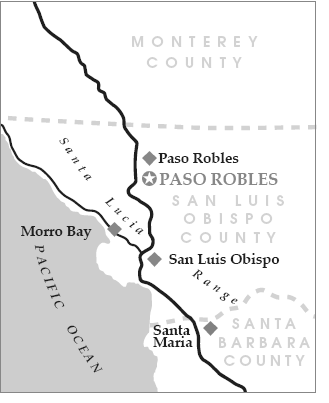
Anyhoo, one of the grapes that grows well in Paso Robles, which is located in the center of California’s Central Coast between San Francisco and Los Angeles, is Zinfandel. In fact, it is historically the area’s first successful wine variety. We chose the 2004 Rosenblum Cellars Zinfandel Appellation Series Paso Robles at around $16 along with the 2003 Linne Calodo Outsider from Paso Robles (a blend, the vast majority Zinfandel) ringing in at $45. This, we surmised, would give us a decent idea of how typical Paso Robles Zins are produced and how they come across on the nose and palate.

I filled Winemonkey’s two glasses with a tasting sized pour while he looked away and he did the same for me. As we sat down to discuss the wines (not knowing which was which of course) we either had completely differing opinions or the wines were poured in the same order. One glass of Zin we found overly sweet, almost sugary, and rather simple. The other seemed to have more depth to it, perhaps from other varietals being blended in as well as more care being taken during winemaking. Using our prior knowledge and, unfortunately for this particular tasting, knowing the general pricing of the two bottles, we pegged the sweet, simple wine as the Rosenblum and the more complex as the Linne Calodo.

As you may have guessed by now, we were wrong. Dead wrong. We had indeed poured the wines for one another in the same order and, lo and behold, the seemingly more complex and well-balanced wine turned out to be the Rosenblum! Before you get all excited and run out and buy a case of Rosenblum Paso Robles Zinfandel, let me just note that we were not especially impressed by either wine. In fact, we have blogged about some well-priced Zins in the past and prefer them all to the Rosenblum. The fact remains, however, that it beat out a more expensive wine from the same area which, incidentally, has a year more age on it. Pretty surprising and, well, pretty impressive.

I guess the moral of the story is never to judge a book — or a wine — by it’s cover. In this case all you get is an emptier wallet.

Stay tuned for breaking news about the reality series "The Wine Makers" on PBS!

Thursday, September 28, 2006

The New New Thing

As many you are aware, our favored Bordeaux grape varieties have fallen slightly out of favor with the current crop of California loving wine geeks. California pinot and syrah are the current flavors of the month and they show no signs of letting up. Was this a reaction to Sideways? Perhaps. More likely, I feel that sky high Napa Cab prices have driven consumers of quality wine to find alternative sources to get their fix. It also doesn’t hurt to be leading the trend and rubbing it in your friend’s face that you made a mailing list he missed, and oh... does he want to split YOUR allocation? (yeah, wine buyers can be a funny sort) That pettiness aside it is clear that wine enthusiasts are always on the look out for the next new thing so they can stay ahead of the curve. Buyers are fickle on the whole and like to feel special. Another Insignia is not going to cut it. I applaud everyone buying into the new pinot and syrah craze, but here I offer the NEW new thing.

During our extended California tasting trip, Jen and I had some crazy good Cab Franc. As you know we focus on the Bordeaux varietals with a heavy emphasis on Cab, Merlot and blends. There were many outstanding wines in the bunch, but during the trip it be came apparent to us that the most interesting and well priced wines were the Cab Franc mono-varietals and “right bank” blends. Virtually all were priced reasonably due to the relatively unfashionable Cab Franc grape used. Hold on, I know what you’re thinking--a mouth full of green pepper and weed. To that I say, this not your father’s Cab Franc. The green pepper flavored Cab Franc of the Loire Valley and elsewhere have nothing in common with what California can do with the grape in the hands of good producer.

They can get some serious ripeness in that valley and it makes all the difference. The wines are a touch spicy with ripe round fruit and interesting depth. These Francs had tons of character and interest. And let me tell you after tasting a bazillion wines that is a big factor in making a wine enjoyable. So drink up!

Oh and get them before you friend does.

Tuesday, September 26, 2006

Would You Like A Zin With That?

It has been quite a while since I actually enjoyed drinking Zinfandel. So, when I recently discovered three Zins that I found pleasurable to drink (with food in fact) I thought I should share.

In recent years I found most Zinfandels weighed down with alcohol and overripe fruit. Zin, to me, became the kind of wine that does not match well with food but with which food is absolutely necessary if you don’t want to fall on your face from drinking it. My opinion of Zinfandel has subsequently been swayed by three exceptionally balanced bottles with both alcohol and price in check.

The three Zinfandel producers recommended below may not be for the Turley crowd, but if you enjoy a lusciously jammy and spicy wine that pairs brilliantly with grilled meats, BBQ, and such appetizers as, say, figs wrapped in bacon you will not be disappointed. Keep in mind that 2003 and 2001 were the best recent vintages for Zinfandel but other current vintages were rated above average as well. I have not noted specific vintages below as I suggest you try what you can find out in the market today.

The Zins

Bald Mountain Zinfandel
California, Napa
The wine is full of soft, juicy berries and has an alluringly silky texture. Not to be taken too seriously, this is a fun bottle of wine with just the right amount of spice and vanilla to complement the jammy fruit. Great with food, especially the bacon wrapped figs mentioned earlier, the wine sells for approximately $27 retail.

Downing Family Fly by Night Zinfandel
California, Napa, Oakville
A Zin from Cab Country, the grapes are organically farmed from a single vineyard. Interestingly, Downing Family has bottled Fly by Night with both cork and Stelvin screw cap closures since the 2000 vintage. A beautiful wine with succulent acidity and ripe berry flavors along with chocolate and mineral notes. The wine has impressive intensity and balance and is a steal at about $20 retail.

The Terraces Zinfandel
California, Napa, Rutherford
This small production Zin has a marked spiciness which harmonizes nicely with the luscious berry fruit. As the wine opens up it shows vanilla and chocolate along with red berry jam. Nicely layered with great balance and a long finish, this is a great “go to” Zin at about $25 a bottle.